DCR Requirements in Solar Projects: A Simple Guide
As India continues to expand its solar energy ecosystem, government policies are playing an important role in encouraging domestic solar manufacturing.
One term that solar buyers, EPC companies, dealers, and installers frequently come across is DCR — Domestic Content Requirement.
DCR can directly influence which solar modules are eligible for a particular project. Understanding the requirement before procurement is important because a technically suitable solar module may still not meet the applicable sourcing conditions of a government-supported project.
What Does DCR Mean in Solar?
DCR stands for Domestic Content Requirement.
In solar projects where DCR provisions apply, specified solar components must satisfy prescribed domestic manufacturing requirements.
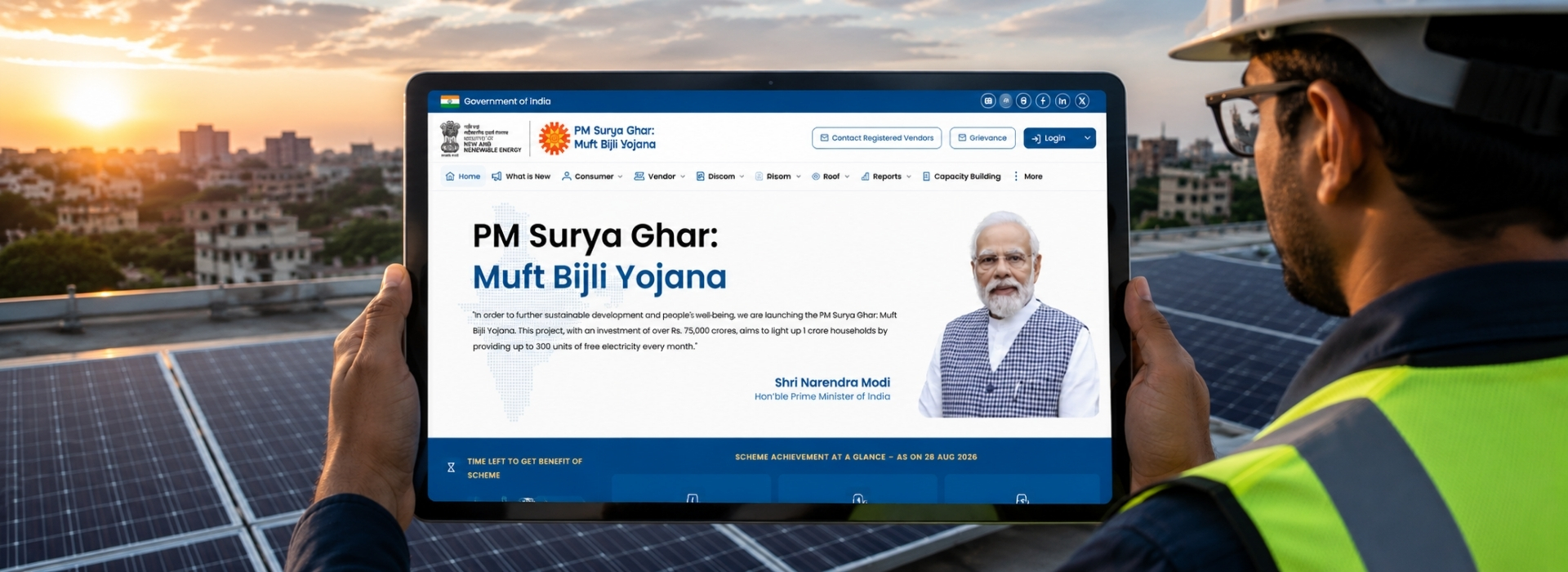
For schemes such as PM Surya Ghar: Muft Bijli Yojana, MNRE guidelines require the use of domestically manufactured modules manufactured from domestically manufactured solar cells for installations receiving Central Financial Assistance (CFA).
This requirement is intended to support India's domestic solar manufacturing ecosystem.
Why Was DCR Introduced?
India's solar market has grown rapidly, creating significant demand for solar cells and modules.
Domestic-content policies are intended to encourage manufacturing within India and strengthen the local solar value chain.
A stronger domestic manufacturing ecosystem can support:
- Indian solar cell manufacturing
- Domestic module manufacturing
- Local manufacturing investment
- Development of the solar supply chain
- Reduced dependence on imported products for applicable projects
DCR therefore forms part of the broader effort to develop India's solar manufacturing capabilities while expanding renewable energy deployment.
Where Are DCR Solar Modules Required?
DCR does not automatically apply to every solar project in India.
Its applicability depends on the government scheme, tender, programme, or procurement conditions under which a project is being developed.
One prominent example is PM Surya Ghar: Muft Bijli Yojana, where residential rooftop solar installations seeking applicable Central Financial Assistance must follow the scheme's domestic-content requirements.
Other government projects or tenders may also specify domestic-content conditions.
Private commercial or industrial projects can have different requirements depending on the applicable policy, project structure, and procurement framework.
Therefore, buyers should always check the latest rules for their specific project rather than assuming that DCR is mandatory — or not mandatory — in every case.
DCR Does Not Define Solar Technology
A common misunderstanding is that DCR represents a particular type of solar technology.
It does not.
DCR primarily relates to domestic-content compliance. Solar cell technology is a separate technical consideration.
Depending on manufacturer offerings and applicable approvals, DCR-compliant modules may use modern technologies such as:
- N-Type TOPCon
- Bifacial technology
- Dual-glass construction
- High-efficiency cells
- High-wattage module designs
Therefore, a buyer should evaluate compliance and technology separately.
A module may satisfy the project's domestic-content requirements, but its wattage, efficiency, electrical specifications, dimensions, and inverter compatibility still need to match the project.
DCR vs Non-DCR Solar Modules
The basic distinction can be understood simply.
DCR Solar Modules:
Modules procured for applications requiring compliance with prescribed domestic-content conditions.
Non-DCR Solar Modules:
Modules that are not being procured under those specific DCR conditions and may be used in eligible projects where DCR is not required.
The classification itself does not automatically determine whether one module will generate more electricity than another.
Performance depends on factors such as cell technology, module efficiency, wattage, temperature characteristics, system design, installation conditions, and equipment compatibility.
DCR and ALMM Are Not the Same Thing
Another important point for solar buyers is that DCR and ALMM should not be treated as interchangeable terms.
DCR relates to domestic-content requirements.
ALMM, or the Approved List of Models and Manufacturers, is a separate regulatory framework maintained by the Ministry of New and Renewable Energy for applicable solar PV products and projects.
A project may have requirements relating to DCR, ALMM, or both depending on the applicable scheme and current regulations.
This is why EPCs and buyers should verify each compliance requirement independently before procurement.
Why Documentation Is Important
For projects subject to DCR requirements, buyers should not rely only on verbal confirmation from a seller or supplier.
Appropriate product and manufacturer documentation should be checked before placing the order.
Depending on the project, buyers may need to verify information relating to:
- Solar module manufacturer
- Solar cell origin
- Module manufacturing requirements
- Applicable product/model eligibility
- DCR compliance documentation
- ALMM applicability
- Scheme or tender specifications
Maintaining proper documentation can help EPC companies avoid procurement issues during project inspection, approval, or subsidy processing.
What Should EPCs Check Before Ordering DCR Modules?
Before placing an order, EPC companies, solar installers, dealers, and project developers should confirm:
- Whether DCR applies to the project
- Applicable government scheme or tender
- Latest MNRE or project-specific guidelines
- Solar cell and module manufacturing requirements
- Manufacturer and model details
- ALMM requirements, where applicable
- Module wattage and efficiency
- Electrical specifications
- Inverter compatibility
- Product and performance warranty
- Required quantity and availability
- Project delivery timeline
Checking these details before procurement can help avoid costly product changes later.
DCR Compliance Should Not Replace Technical Evaluation
Compliance is essential when a project requires DCR, but it should not become the only selection criterion.
A solar module still needs to perform as part of the complete system.
EPCs should evaluate factors such as:
Technology: N-Type TOPCon or other applicable cell technology.
Efficiency: How effectively the module converts sunlight into electricity.
Wattage: Whether the module power class supports the required system design.
Dimensions: Whether the module fits the available rooftop or project area.
Electrical Compatibility: Whether voltage and current characteristics match the inverter and string design.
Warranty: Whether product and performance warranties meet project expectations.
The ideal procurement decision therefore combines regulatory compliance with technical suitability.
Why Staying Updated Matters
Solar regulations in India continue to evolve as domestic manufacturing capacity expands and government programmes develop.
Requirements applicable today may be updated through future MNRE notifications, scheme guidelines, amendments, or project-specific tender conditions.
For this reason, EPCs, dealers, installers, and buyers should verify the latest official guidelines applicable at the time of procurement instead of relying on older market information.
Conclusion
Domestic Content Requirement (DCR) is an important part of India's solar policy framework and plays a significant role in eligible government-supported solar projects.
For solar buyers, the most important point is simple: check the project requirement before choosing the module.
If DCR applies, the selected product must satisfy the prescribed domestic-content conditions. At the same time, buyers should continue evaluating module technology, wattage, efficiency, inverter compatibility, warranty, and overall project suitability.
For EPC companies, solar dealers, installers, and project developers, understanding the difference between DCR, Non-DCR, and ALMM requirements can help improve procurement decisions and reduce compliance-related issues during project execution.