From Module Selection to Supply: How Better Procurement Supports Solar Projects
A successful solar project does not begin when the first module is installed.
It begins much earlier — with planning and procurement.
For EPC companies, installers, and project developers, selecting the right solar module is only one part of the process. The required quantity must also be available, technical specifications must match the system design, documentation must be correct, and material must reach the project site according to schedule.
A delay or mistake at the procurement stage can affect the entire project timeline.
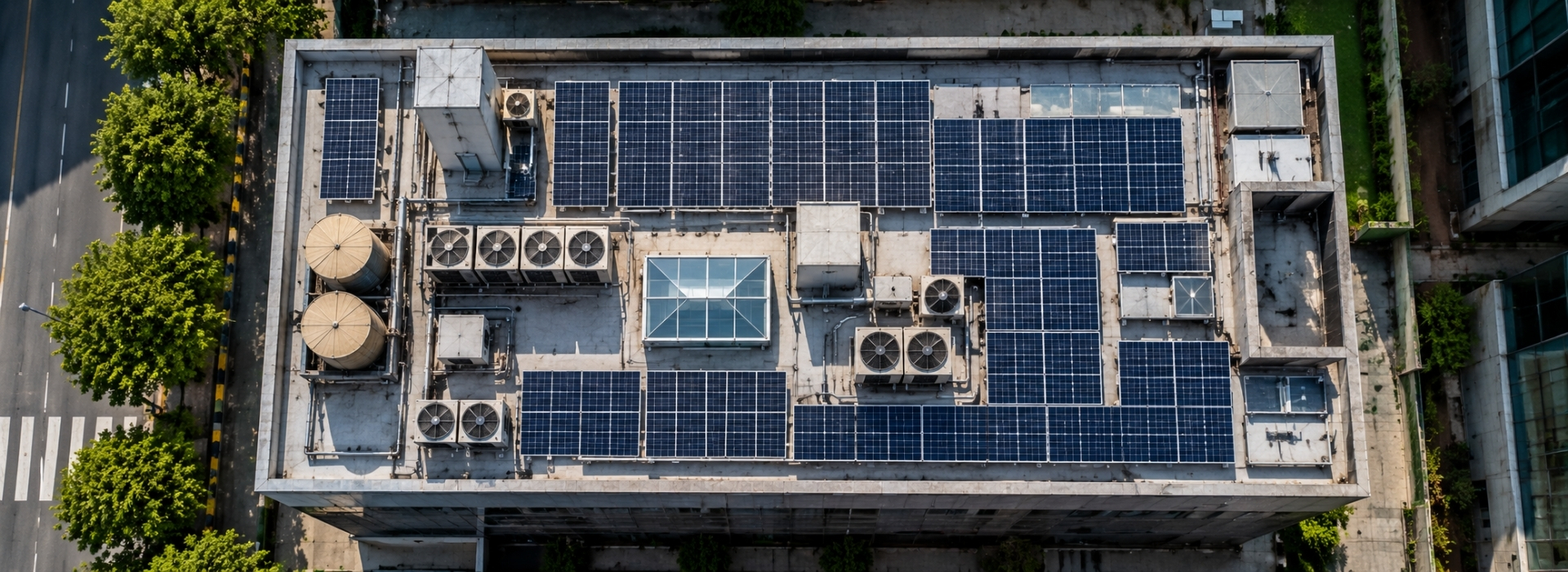
Consider a commercial solar project where the EPC needs to source modules for an upcoming installation. Here is how a structured procurement process can support better project execution.
The Project Requirement
Imagine an EPC company preparing for a commercial rooftop solar project.
Before ordering modules, the team needs to finalize several details:
- Required project capacity
- Available rooftop area
- Module wattage
- Solar cell technology
- DCR or Non-DCR requirement
- Module dimensions
- Electrical specifications
- Inverter compatibility
- Required quantity
- Delivery schedule
If procurement begins before these details are confirmed, the EPC may end up with modules that are available in the market but are not suitable for the project.
Step 1: Selecting the Right Solar Module
The first step is matching the solar module to the actual project requirement.
Suppose the EPC is considering a high-wattage N-Type TOPCon solar module for a commercial installation.
Instead of selecting it only because of the higher wattage, the technical team evaluates its efficiency, dimensions, current and voltage characteristics, construction, warranty, and compatibility with the proposed system.
If bifacial or dual-glass modules are being considered, site conditions and mounting design are also evaluated.
The objective is simple:
Choose the module that fits the project — not simply the module with the biggest wattage number.
Step 2: Confirming Compliance Requirements
Product selection also needs to consider applicable project requirements.
Depending on the project, the EPC may need to determine whether DCR, ALMM, tender-specific, or other procurement conditions apply.
For example, a project requiring DCR-compliant modules cannot simply switch to a Non-DCR option because it is cheaper or immediately available.
Similarly, documentation should be verified before the purchase order is finalized.
This helps reduce the possibility of discovering a compliance issue after the material has already reached the project site.
Step 3: Checking Module and Inverter Compatibility
Solar modules and inverters need to work as part of one electrical system.
Before ordering the modules, the EPC should check parameters such as:
- Module operating voltage
- Open-circuit voltage
- Module current
- Inverter MPPT range
- Maximum DC input voltage
- Maximum input current
- Modules per string
- String configuration
This becomes particularly important with modern high-power solar modules, which may have electrical characteristics different from older module generations.
A procurement decision should therefore be supported by the project's technical design.
Step 4: Confirming Quantity and Availability
Once the module is finalized, the next question is:
Is the required quantity available when the project needs it?
For an EPC managing installation teams, equipment, transportation, and client commitments, material availability can directly influence the project schedule.
If the required modules are unavailable at the planned time, the EPC may have to:
- Delay installation
- Change the project schedule
- Rework the module layout
- Evaluate another product
- Recheck inverter compatibility
- Seek fresh client or technical approvals
Confirming availability before committing to the installation schedule can help reduce these disruptions.
Step 5: Planning Supply Around the Project Timeline
Procurement should be connected with project execution rather than handled as an isolated purchase.
Consider a project where the installation team is scheduled to begin work during a particular week.
Ideally, module dispatch should be planned so that material reaches the required location according to the project sequence.
Sending material too late can delay installation.
Sending it too early may create unnecessary storage, handling, or site-management challenges.
Better coordination between the EPC, solar distributor, logistics team, and project site can help create a smoother supply process.
Step 6: Documentation Should Move with the Material
Solar procurement is not only about physical products.
Documentation can be equally important.
Depending on the project, EPCs may need access to:
- Product datasheets
- Warranty information
- Manufacturer documentation
- Compliance-related documents
- Product identification details
- Technical specifications
- Applicable certifications
Having the required documentation available during procurement can help technical teams, customers, and project stakeholders verify the selected product more efficiently.
Why a Reliable Distribution Partner Matters
Solar distributors can play an important role between manufacturers and project businesses.
For an EPC, a dependable distribution partner can provide more than product availability.
The distributor may support the procurement process through:
Product Options: Helping buyers understand available module categories and specifications.
Inventory Visibility: Providing clearer information about available products and quantities.
Technical Coordination: Supporting access to specifications and relevant product documentation.
Commercial Coordination: Helping EPCs plan orders according to project requirements.
Dispatch Support: Coordinating material movement according to the agreed supply schedule.
This can be particularly valuable for EPCs handling multiple projects simultaneously.
The Difference Between Buying and Procurement
Buying solar modules and managing solar procurement are not exactly the same thing.
Buying focuses mainly on obtaining the product.
Procurement considers the complete requirement:
Right Product → Right Specification → Right Quantity → Right Documentation → Right Delivery
For project-based businesses, this broader approach can help reduce unnecessary changes during execution.
What Was the Outcome in This Example?
By finalizing technical requirements before ordering, confirming product availability, checking documentation, and coordinating dispatch with the installation timeline, the EPC can move into the execution stage with greater clarity.
The modules arriving at the site already match the planned system design.
The installation team does not need to redesign the layout because a different wattage was supplied.
The electrical team does not need to unexpectedly change string calculations.
And the project schedule is less likely to be affected by last-minute material sourcing.
The value of better procurement is therefore not limited to the purchasing stage — it can influence the entire project workflow.
What Should EPCs Check Before Placing an Order?
Before confirming solar module procurement, EPC companies and project developers should review:
- Project capacity
- Module technology
- Wattage and efficiency
- Module dimensions
- Electrical specifications
- DCR or Non-DCR requirement
- ALMM applicability, where relevant
- Inverter compatibility
- Product warranty
- Required quantity
- Stock availability
- Documentation
- Dispatch schedule
- Delivery location
- Project timeline
This checklist can help turn module procurement into a planned project activity rather than a last-minute purchase.
Conclusion
Solar project performance depends on good engineering, but successful execution also depends on reliable procurement and supply planning.
Selecting the right module is only the beginning.
For EPC companies, installers, and project developers, better procurement means ensuring that the selected solar modules are technically suitable, compliant with applicable requirements, available in the required quantity, supported by proper documentation, and delivered according to the project schedule.
A reliable solar distribution and supply chain can therefore become an important part of efficient project execution.
In solar procurement, the goal is not simply to buy panels.
It is to get the right solar modules to the right project at the right time.