How Solar Dealers Can Choose a Reliable Distribution Partner
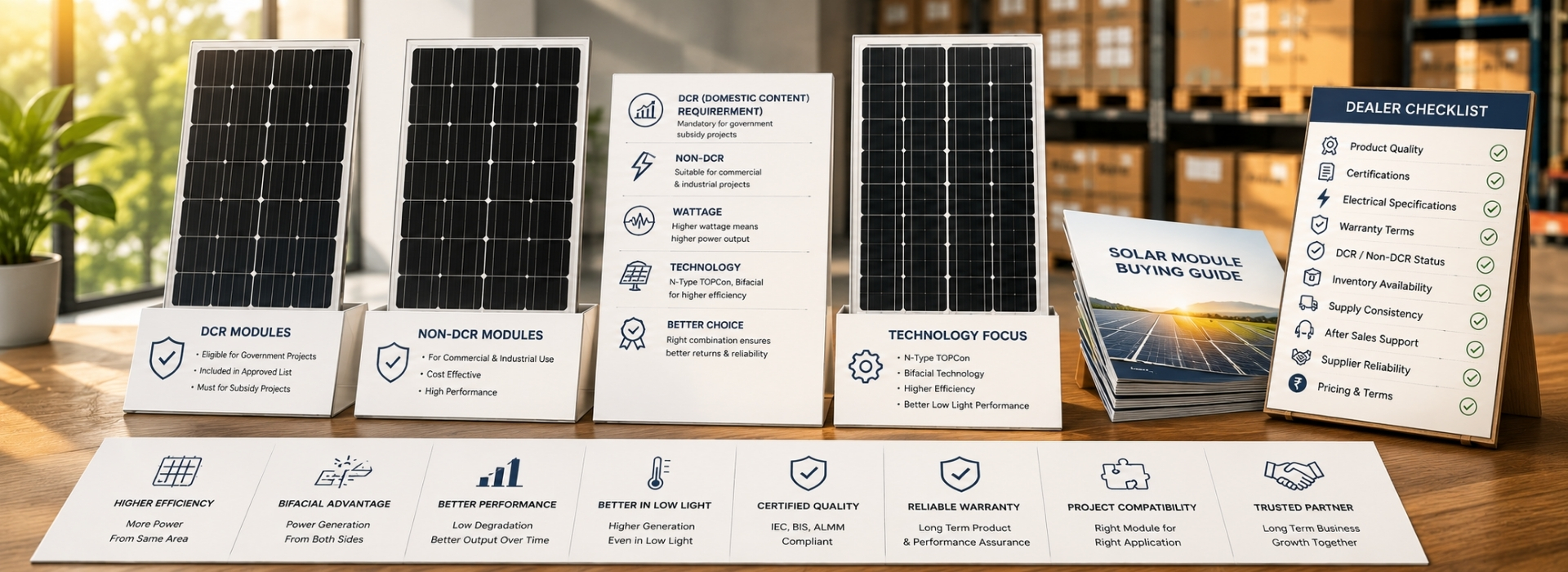
For a solar dealer, choosing the right products is important — but choosing the right solar distribution partner can be equally important.
Dealers regularly need modules, inverters, and other solar products for different project requirements. If the required material is unavailable, documentation is incomplete, or dispatch is delayed, the dealer may struggle to meet commitments made to EPCs, installers, and customers.
A reliable distributor therefore does more than supply products.
The right distribution partner helps dealers maintain a smoother procurement process, access suitable products, and respond to changing project requirements.
Here are the key factors solar dealers should evaluate before choosing a distribution partner.
1. Check the Product Portfolio
Different solar projects require different products.
One customer may need a high-wattage module for a commercial project, while another may require DCR-compliant modules for an eligible residential rooftop installation.
A distributor with a relevant product portfolio can make sourcing easier.
Dealers should evaluate whether the distributor can support requirements such as:
- N-Type TOPCon solar modules
- High-wattage solar modules
- DCR and Non-DCR options
- Bifacial modules
- Dual-glass modules
- Solar inverters
- Other relevant solar products
The objective is not simply to find the distributor with the largest catalogue. It is to find one with products that match the dealer's actual market requirements.
2. Product Availability Matters
A good product is useful only when it is available when the customer needs it.
Solar dealers often work with project-specific timelines. If material availability changes unexpectedly after an order is discussed, the dealer may have to find an alternative product or delay supply.
This can affect both the dealer and the EPC.
Before building a long-term relationship, understand how the distributor manages:
Inventory → Order Confirmation → Dispatch → Delivery
Clear communication regarding available models, wattages, quantities, and expected dispatch timelines can make procurement much more predictable.
3. Look for Reliable Supply, Not Just One-Time Availability
Having stock today does not necessarily make a distributor a reliable long-term partner.
Dealers should also evaluate the consistency of the supply chain.
For businesses handling recurring orders, reliable supply can help with:
- Better project planning
- Faster procurement
- Reduced last-minute sourcing
- Consistent product availability
- Better customer commitments
- Easier inventory planning
A strong distribution relationship becomes particularly valuable as the dealer's order volume and customer base grow.
4. Technical Product Knowledge Is Important
Modern solar modules cannot always be compared using wattage alone.
A dealer may need to understand differences between N-Type TOPCon, bifacial, dual-glass, DCR, Non-DCR, and different power classes.
A distribution partner with good product knowledge can help dealers access relevant technical information before making a purchase decision.
This may include information about:
- Module technology
- Wattage
- Efficiency
- Dimensions
- Electrical specifications
- Module construction
- Product applications
- Warranty details
The final technical decision should always be based on the project design and official manufacturer documentation, but access to accurate product information makes the procurement process easier.
5. Documentation Should Be Clear
Documentation is particularly important when products are being supplied for projects with specific regulatory or technical requirements.
Depending on the project, dealers may need access to:
- Product datasheets
- Manufacturer details
- Warranty documentation
- Technical specifications
- Applicable certifications
- DCR-related documentation
- ALMM-related information, where applicable
Dealers should avoid relying only on verbal claims about product eligibility or technical performance.
A reliable distributor should be able to support the buyer with the appropriate available product documentation.
6. Understand DCR and Non-DCR Supply
For dealers operating in the Indian solar market, understanding DCR and Non-DCR requirements is increasingly important.
Some projects may require modules that comply with applicable Domestic Content Requirement conditions, while other eligible projects may use Non-DCR products depending on current regulations.
The distribution partner should clearly communicate which product is being supplied.
This reduces the risk of ordering material that may be technically suitable but does not match the project's regulatory requirement.
For policy-dependent projects, the latest official guidelines should always be verified before procurement.
7. Compare More Than the Lowest Price
Price is naturally important in solar distribution, especially in a competitive market.
But selecting a supplier based only on the lowest quotation can create other costs if the material is delayed, specifications are unclear, or the wrong product reaches the project.
Dealers should evaluate the complete value offered by the distributor:
Product + Price + Availability + Documentation + Support + Delivery
A slightly different commercial offer may provide better overall value if it gives the dealer greater supply certainty and reduces procurement complications.
8. Evaluate Dispatch and Logistics Support
Solar modules require careful transportation and handling.
For dealers supplying projects across different locations, dispatch coordination can directly influence customer experience.
Before choosing a distributor, understand:
- Dispatch process
- Expected timelines
- Quantity coordination
- Packaging standards
- Transportation arrangements
- Delivery communication
Reliable logistics become especially important for bulk commercial and industrial orders where a delay can affect installation teams and project schedules.
9. Communication Can Make a Major Difference
Solar procurement can change quickly.
A project quantity may increase. A particular wattage may become unavailable. A customer may need an alternative module. A dispatch date may need adjustment.
In these situations, responsive communication becomes extremely valuable.
A dependable distribution partner should provide clear information regarding product availability, specifications, order status, and dispatch.
For dealers, this can make it easier to provide accurate updates to their own customers.
10. Look for a Long-Term Business Partner
The strongest dealer-distributor relationships are not built around a single order.
As a solar dealer grows, procurement requirements can become more complex. The business may begin supplying larger EPCs, entering new locations, or handling multiple projects simultaneously.
A distribution partner that understands these requirements can support the dealer's growth over time.
Dealers should therefore evaluate:
- Product reliability
- Supply consistency
- Commercial transparency
- Technical coordination
- Documentation support
- Response time
- Dispatch reliability
- Long-term relationship potential
The objective should be to build a dependable supply network rather than repeatedly searching for a new supplier for every order.
What Should Solar Dealers Check Before Finalizing a Distributor?
Before starting a long-term association, dealers should consider whether the distributor provides the right combination of:
- Trusted solar products
- Suitable technology options
- DCR and Non-DCR product availability
- Competitive commercial terms
- Ready or clearly communicated inventory
- Proper product documentation
- Technical information
- Reliable dispatch
- Responsive communication
- Consistent supply support
A distributor that performs well across these areas can become an important part of the dealer's business ecosystem.
Conclusion
Choosing a reliable solar distribution partner requires more than comparing prices.
Solar dealers should evaluate the distributor's product portfolio, inventory availability, technical knowledge, documentation, supply consistency, commercial transparency, logistics, and communication.
As the solar market expands and technologies such as N-Type TOPCon, bifacial, dual-glass, DCR, Non-DCR, and high-wattage modules become more important, dependable procurement support can give dealers greater confidence when serving EPCs, installers, and project customers.
The right distributor should not simply help you buy solar products.
They should help you source the right products, in the right quantity, at the right time.